Protecting your home from gas leaks starts with reliable detection and timely alerts. This guide highlights top wireless or app-connected natural gas detectors that can notify you remotely, helping you act fast whether you’re at home or away. Each option below emphasizes safety, ease of use, and real-time notifications to fit American households, apartments, RVs, and cabins.
Summary of chosen products:
| Product | Brand | Connectivity | Key Benefit | Image |
|---|---|---|---|---|
| Smarter Living WiFi Gas Alarm | Smarter Living | WiFi, Phone Alerts | UL 1484 compliant, real-time phone alerts, high 7% LEL trigger |  |
| 2-in-1 Gas & CO Detector | tulilut | WiFi (App control) | Real-time app alerts, live readings with LED display |  |
| PT520A Natural Gas Detector | TOPTES | Battery powered (portable) with gooseneck | Long reach probe for hard-to-access leaks |  |
| Kidde CO & GAS Detector | Kidde | Plug-in with display | Digital readouts for CO and gas presence, backup power | 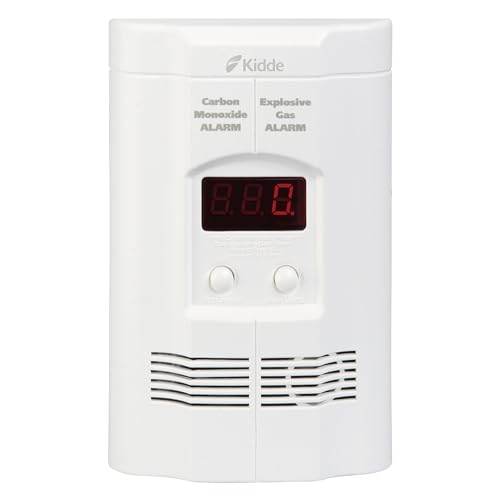 |
| 4-in-1 Gas Detector | KAIX | Battery powered | Multi-gas detection with audible and visual alerts |  |
Note: Product features and connectivity vary. Always follow manufacturer instructions and local codes for installation and maintenance.
Smarter Living WiFi Gas Alarm Detector
The Smarter Living device is UL 1684 compliant for residential gas detection, emphasizing professional-grade reliability. It provides instant phone alerts when a leak is detected, with a 70 dB audible alarm on the device itself. The detector specifically targets combustible gases including natural gas, propane, methane, and related fuels, with the alarm trigger set at 7% LEL to offer a higher safety margin. The unit supports remote notifications even if WiFi is temporarily disconnected, contributing to continuous safety coverage.
2-in-1 Gas & CO Detector With WiFi App Control
This plug-in detector provides simultaneous CO monitoring and combustible gas detection, combining gas detection for methane, natural gas, propane, LPG, and butane with a carbon monoxide alert. Connectivity to 2.4 GHz WiFi enables remote monitoring via the Tuya Smart / Smart Life app, delivering instant phone notifications. The bright LED display shows live gas readings (ppm), and the device supports history reviews, volume adjustments, and remote silencing for added convenience.
PT520A Natural Gas Detector With Gooseneck
The TOPTES PT520A focuses on source localization with a 17-inch gooseneck, enabling access to tight spaces like pipelines, basements, and RV compartments. It detects methane, propane, natural gas, LPG, and butane, with a fast 0.5-second response and a 75 dB audible alarm that intensifies with gas concentration. The device is ideal for pinpointing leaks in hard-to-reach areas, though it does not offer WiFi connectivity.
Kidde Carbon Monoxide and Gas Detector
The Kidde device combines carbon monoxide detection with a propane/natural gas detector in a plug-in unit, backed by a 9-volt battery backup for power outages. Its digital LED display shows CO levels clearly, and it indicates “GAS” when an explosive gas is present. This makes it a solid choice for households seeking a straightforward, always-on monitor with a simple readout in locations with standard electrical outlets.
4-in-1 KAIX Gas Detector
The KAIX detector combines natural gas, propane, CO, and smoke detection into a single device with LED indicators for status and an audible alarm. It operates on batteries, offering portability and easy placement in kitchens, RVs, or away-from-outlets areas. The multi-indicator system makes it simple to discern normal operation from faults or activations, which is beneficial for quick safety checks across multiple spaces.
Buying Guide: Key Purchase Considerations
When choosing a wireless natural gas detector, consider the following aspects to ensure you pick the right model for your space and safety needs:
- Connectivity and alerts: If remote monitoring matters, prioritize WiFi-enabled devices or ones with smartphone notifications. Verify compatibility with your home ecosystem (iOS/Android, Smart Life/Tuya, or other platforms).
- Detection scope: Look for units that detect a broad range of flammable gases (natural gas, propane, methane, LPG, butane) and, if needed, carbon monoxide for comprehensive safety.
- Alarm features: Check both audible alarm levels and visual indicators. Higher dB levels and clear LEDs improve immediate awareness in noisy or large spaces.
- Power source: Determine whether the device is plug-in, battery-powered, or hybrid. Battery-powered models offer portable flexibility and outages-safe operation, while plug-in units usually provide continuous power.
- Response time and sensitivity: Short detection times (fractions of a second) and appropriate LEL/ppm thresholds help minimize risk. Some models allow adjustable sensitivity.
- Placement guidance: Use devices with flexible probes or long cords when possible to reach basements, attics, kitchens, and RV compartments for optimal coverage.
- Maintenance and warranty: UL/ETL listings indicate compliance with safety standards. Look for warranties and easy battery replacement or service support.
- Ease of use: User-friendly interfaces, clear displays, and app controls reduce complexity in emergencies and routine checks.
Choosing the right detector may involve balancing remote monitoring needs with location-specific requirements, such as RV travel safety or multi-space protection in a home. Always install detectors according to manufacturer instructions and check them regularly to maintain peak performance.