For guitarists who need a compact, reliable powered pedalboard, the right setup delivers clean power, organized wiring, and easy transport. The following five products are among the best small powered pedal boards on the market, offering built‑in power supplies, multiple isolated outputs, and lightweight builds suitable for travel, rehearsals, and small venues. This guide highlights key features, size considerations, and practical use cases to help you choose a board that fits your pedal collection and performance style.
A quick reference of the selected products:
| Product | Brand | Approx. Size | Outputs | Special Notes |
|---|---|---|---|---|
| RVONE Guitar Pedal Board with Power Supply (RBP-150) | RVONE | 14.5″ x 5.2″ | 10 isolated outputs | Lightweight aluminum; includes bag |
| Vangoa Guitar Pedal Board with Built-in Isolated Power Supply | Vangoa | 16.1″ x 6.5″ | 8 outputs | Foldable legs; integrated power |
| STRICH PB-M15 Pedalboard | STRICH | 15″ x 5.1″ | 10 independent ports | Integrated power; multiple voltage options |
| Donner Guitar Pedal Board with Built-in Power Supply | Donner | 19.7″ x 5.0″ | 7 x 9V + 12V + 18V | USB charging port; solid aluminum |
| Guitar Pedalboard With Built-in Power Supply (Lotmusic) | lotmusic | 21.2″ x 4.3″ | 7–9V, 12V, 18V options | Includes bag and cables |
RVONE: Compact, 10-Isolated-Output Pedal Board
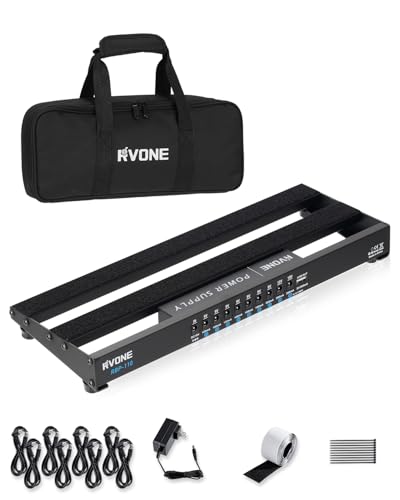
This RVONE pedal board emphasizes stable power with 10 isolated DC outputs, reducing noise and avoiding cross‑talk between pedals. The 14.5″ x 5.2″ compact footprint makes it suitable for beginners, travel gigs, and home studios. The aluminum alloy construction provides durability without excessive weight, and a included bag aids transport between rehearsals and stages.
Vangoa: Built‑In Isolated Power, Small Portable Board

Vangoa offers an all‑in‑one design with a TRUE isolated power supply for live gigs. It’s a compact 16.1″ x 6.5″ board that hides the power supply inside the unit, helping keep setup tidy. The foldable legs provide a 20‑degree elevation for comfortable pedal access, and the board is suitable for loading 5–7 pedals depending on layout.
RVONE: Small Aluminum Pedalboard, Lightweight

This RVONE model provides 10 independent power outputs on a slim aluminum board. Its one‑piece design focuses on portability without sacrificing a stable power delivery. Included hook & loop tapes make pedal installation quick, with a lightweight build than can handle frequent transport to gigs or studios.
STRICH PB-M15: Integrated, Hassle‑Free Power

STRICH PB-M15 combines an integrated power supply with a compact frame. It supports 10 independent ports, including several 9V outputs and higher voltage options, plus a USB 5V/800mA port. The design emphasizes short‑circuit protection for reliable, quiet operation across varied pedal setups.
STRICH PB-S15: Foldable, Flexible Power

STRICH PB-S15 rounds out the STRICH line with a 15″ x 11″ footprint and a 10‑port configuration. Like the M15, it provides robust power management and multiple voltage options to accommodate diverse pedal types, with a focus on portable, on‑the‑go use.
Donner: Aluminum Mini Board With Power

Donner’s DB-P100 is a compact, aluminum alloy pedal board that packs a built‑in power supply with independent channels. It offers seven 9V outputs plus 12V and 18V options, plus a USB port for charging devices. Its light weight and stability make it practical for small live setups and studio use.
Lotmusic: Light, Portable, Power Integrates

Lotmusic presents a compact, aluminum alloy pedal board with a built‑in power supply and a carrying bag. It’s designed for ease of use and portability, including pedal cables and hook tape for quick setup. The board aims to balance lightweight design with solid pedal support for smaller rigs.
Buying Guide: Key Purchase Considerations
- Power needs and isolation: Look for boards with independent, isolated outputs to minimize noise and ground loop issues. If you run a larger pedal collection or sensitive distortions, more outputs and true isolation help maintain performance fidelity.
- Size and portability: Consider the footprint of the board and the number of pedals you typically use. Slim profiles are ideal for travel, but ensure there’s enough room for each pedal’s footprint and cable routing.
- Weight and durability: Aluminum alloy builds strike a balance between lightness and rigidity. For frequent transport, lighter boards with reinforced carrying options reduce setup time and fatigue.
- Integrated power vs. modular power: Built‑in supplies simplify setup and cable management, but some players prefer modular, external power to upgrade gradually or to accommodate larger rigs.
- Voltage options: Check whether the board offers 9V, 12V, and 18V outputs, and the current capacities per channel. Your pedal selection may require specific voltages beyond standard 9V.
- Accessories: A good board often includes a carrying bag, hook-and-loop tape, and cables. These extras save setup time and protect pedals during transit.
- Compatibility: Ensure the board supports the number and layout of pedals you own, including any larger expressions or specialty pedals that may require extra space or offset mounting.
- Budget vs. value: Compare the combined value of built‑in power, durability, and included extras. A higher upfront cost may save time and cable clutter in the long run.
When selecting a small powered pedal board, align the choice with your typical performance context—studio work, practice, or on‑stage gigs. Prioritize noise-free operation, robust construction, and easy transport to maintain a reliable, portable rig that adapts to evolving gear needs.