For outdoor enthusiasts, a reliable personal locator beacon (PLB) or distress beacon is a critical safety tool. This guide highlights five top beacons designed to improve visibility to rescuers, provide location data, and support rapid responses in hiking, hunting, boating, or fishing scenarios. Each option includes GPS, global coverage, and return link services where available. Read on to compare features, battery life, and connectivity that can influence effectiveness in real-world emergencies.
Summary of chosen products:
| Product | Key Features |
|---|---|
| ACR ResQLink 400 | GPS, 406 MHz distress signals, subscription-free |
| ACR ResQLink View RLS | Return Link Service, digital display, infrared strobe |
| ACR ResQLink 410 RLS | GPS, MEOSAR, RLS, long battery life |
| ACR GLOBALFIX V6 GPS EPIRB | Global coverage, GNSS, 121.5/ MEOSAR, NFC |
| Black Diamond Recon X Beacon | Digital search accuracy, multiple victim detection |
ACR ResQLink 400 – SOS Personal Locator Beacon

The ResQLink 400 is designed for outdoor emergencies with no subscription fees. It employs a 406 MHz distress signal for rescuers and a GPS-based location provide fast, accurate response. An LED strobe and infrared strobe offer high visibility in low-light environments, increasing chances of being located quickly. The device is compact, making it suitable for hikers, boaters, and hunters who require reliable, subscription-free coverage. Battery life information is supported by typical field performance expectations in emergencies.
ACR ResQLink View RLS – Digital Display, Return Link Service

The ResQLink View RLS adds a digital display and Return Link Service to confirm receipt of distress signals by Search and Rescue. It provides clear visibility via infrared strobe and does not require ongoing subscriptions. With a 5-year battery life and extended operational life beyond 28 hours, it supports reliability in extended outdoor trips. This model emphasizes feedback on signal delivery to help users and rescuers stay informed during emergencies.
ACR ResQLink 410 RLS – GPS With Return Link Service

ResQLink 410 RLS delivers global coverage with GPS positioning and MEOSAR compatibility. It includes Return Link Service to verify that help is en route and offers no subscription requirements for continued readiness. The device typically supports a 5-year battery life and more than 24 hours of usable operation, ensuring dependable performance in day trips and longer expeditions. The combination of GPS, GNSS compatibility, and RLS makes it a strong choice for varied outdoor activities.
ACR RESQLINK AIS Personal Locator Beacon (PLB-450)

The RESQLINK AIS PLB-450 adds Automatic Identification System (AIS) alerts to distress signaling, enabling nearby vessels with AIS receivers to be alerted on VHF channels. It includes Return Link Service and NFC-enabled data access, which provides battery life, activation times, and GNSS test information through a mobile device. This model supports both local and global signaling, benefiting water-based adventures near coastal regions or open waters where vessel traffic is common.
ResQLink View GPS PLB & ResQFlare Bundle
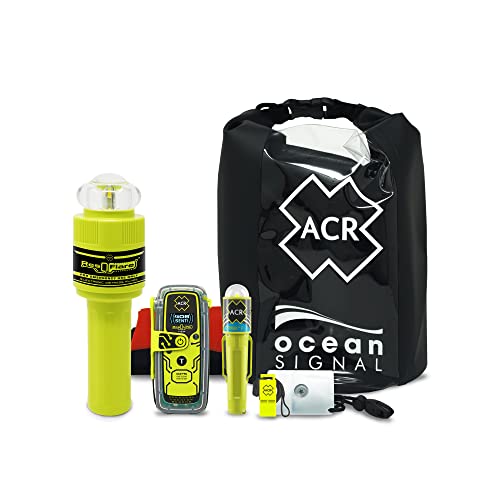
This bundle pairs the ResQLink View Personal Locator Beacon with an electronic distress flare and a C-Strobe rescue light. The combination expands signaling options for nighttime or low-visibility emergencies. While the beacon delivers standard GPS-based distress signaling and RLS, the supplementary flare and strobe provide additional optical cues for rescuers. The package is designed for hikers, campers, and boaters seeking a multi-signal safety kit in one purchase.
Buying Guide: Key Purchase Considerations
- Signal type and coverage: Look for 406 MHz distress signals with GPS, compatibility with MEOSAR, and global coverage when traveling internationally.
- Return Link Service (RLS): RLS provides confirmation that rescue teams received the distress signal, enhancing assurance and response timing.
- Battery life and reliability: Check rated battery life and operational hours to match your typical trip length. Long-life batteries reduce the risk of device failure during extended expeditions.
- Visibility aids: LED or infrared strobes increase visibility in low-light conditions, improving location accuracy for rescuers.
- AIS and vessel support: For water-based activities, AIS-enabled PLBs alert nearby vessels equipped to receive AIS distress signals, widening the search net.
- Ease of data access: NFC or mobile app integration can simplify checking battery status, last tests, and GNSS data before heading out.
- Subscription requirements: Some models offer free operation without ongoing fees, while others include optional services; verify what, if any, fees apply over time.
- Device form factor and durability: Compact, rugged designs with weather resistance suit diverse outdoor environments and gear configurations.
- Additional signaling tools: Bundles with electronic flares or rescue lights can complement beacon signaling in specific scenarios but should not replace primary beacon signaling.
The selection prioritizes devices with GPS positioning, robust signaling, and user-friendly feedback mechanisms. When choosing, consider the typical terrain, travel duration, and proximity to rescue infrastructure. APLB devices with RLS or MEOSAR compatibility provide an added layer of assurance, especially for high-risk activities in remote locations. For maritime users, AIS-enabled PLBs offer targeted visibility to nearby vessels and shore-side responders alike.