Whether upgrading a workstation or expanding a laptop’s capabilities, choosing a PCIe expansion chassis with an X16 slot can unlock high-speed storage, capture, networking, and more. This guide highlights five top options that support PCIe X16 cards through Thunderbolt 3/4 or PCIe interfaces, helping you compare performance, compatibility, and expandability for American readers.
| Product | Brand | Key Benefit | Interface |
|---|---|---|---|
| StarTech Thunderbolt 3 PCIe Expansion Chassis (One PCIe Slot) | StarTech | Adds PCIe X16 slot to laptops/desktops | Thunderbolt 3 |
| StarTech Thunderbolt 3 PCIe Expansion Chassis (Dual PCIe Slots) | StarTech | Dual X16 slots for higher bandwidth tasks | Thunderbolt 3 |
| ASUS Hyper M.2 X16 PCIe 4.0 X4 Expansion Card | ASUS | 4 NVMe M.2 drives with PCIe 4.0 X16 | PCIe x16 |
| GLOTRENDS 24-Port PCIe X16 SATA Expansion Card | GLOTRENDS | Massive 24-port SATA expansion for large storage pools | PCIe 3.0 x8 (upstream) |
| Maskedfish PCIe to Thunderbolt 3/4 & USB4 Dock (MK-Q1L) | Maskedfish | PCIe 3.0 x16 slot via TB3/USB4 for various cards | Thunderbolt 3/4 |
Note: The listed features reflect each product’s capacity to support PCIe expansions, including NVMe, video capture, fiber/ethernet, and storage. GPU compatibility varies; some enclosures are not designed for graphics cards. Review each product’s guidance to ensure your specific card and system configuration will work as intended.
StarTech Thunderbolt 3 PCIe Expansion Chassis — One Slot

The StarTech Thunderbolt 3 PCIe Expansion Chassis provides a single external PCIe 3.0 x16 slot, enabling laptops or desktops with Thunderbolt 3/4 to add PCIe cards. Its aluminum enclosure emphasizes portability with a tool-free design, while Thunderbolt 3 connectivity delivers up to 40 Gbps bandwidth for rapid data transfer. It supports external video outputs via DisplayPort and TB3, extending display options up to 4K/5K at 60Hz. This model is suitable for users who need to add specialized cards (such as capture or networking adapters) without integrating a full internal PCIe upgrade. Note: It does not support GPU graphics cards in this chassis configuration.
StarTech Dual PCIe 3.0 x16 Expansion Chassis

This StarTech chassis offers two external PCIe 3.0 x16 slots within a robust aluminum body, maximizing bandwidth with a combined 32 Gbps throughput (per-slot performance around 21.6 Gbps). It includes a 3.3-foot Thunderbolt 3 cable for flexible layouts and supports high-end cards such as capture, fiber connectivity, and storage expansion—though it excludes external graphics cards due to power and thermals in most configurations. Its dual-slot design suits users seeking parallel PCIe expansion for complex workflows or multi-card setups.
ASUS Hyper M.2 X16 PCIe 4.0 Card (X16)
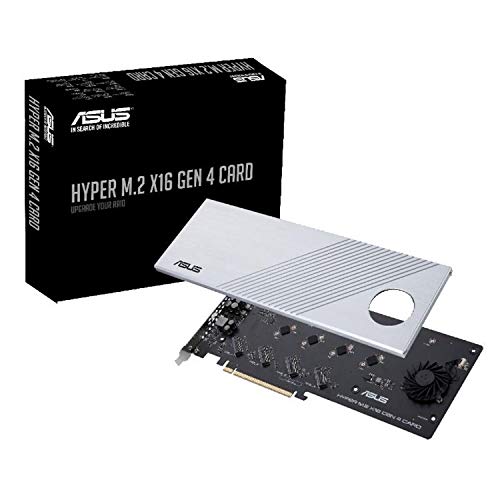
The ASUS Hyper M.2 X16 expansion card is designed for server-grade NVMe configurations, supporting 4 NVMe M.2 drives across 2242/2260/2280/22110 sizes. With PCIe 4.0 technology, it delivers up to 256 Gbps aggregate bandwidth across the X16 interface, enabling high-performance storage arrays in workstations and servers. The card is compatible with PCIe x8 and x16 slots and targets environments like AMD Ryzen Threadripper or Intel VROC configurations. Its design emphasizes power efficiency and robust data transfer for next-gen NVMe drives, while addressing power considerations with a 14W per drive limit for certain drives.
GLOTRENDS 24-Port PCIe X16 SATA Expansion Card

The GLOTRENDS expansion card enables a PC to access 24 SATA drives through a PCIe X8 upstream connection. It is ideal for creating large storage pools or software RAID configurations across Windows, macOS, and Linux environments. The board uses four ASM1166 controllers and supports downstream SATA ports with practical bandwidth of up to around 277 MB/s per port. Built-in LEDs provide drive status visibility, indicating healthy operation or active data transfer. This card fills a niche for large-scale storage expansion and archival use cases rather than PCIe GPU acceleration.
Maskedfish PCIe to Thunderbolt 3/4 & USB4 Dock (MK-M1s)

The Maskedfish MK-M1s provides a PCIe 3.0 x16 expansion path through Thunderbolt 3/4 or USB4, enabling compatibility with a broad range of laptops and desktops. The enclosure supports high-speed peripherals such as video capture cards, NVMe drives, and fiber/ethernet interfaces, utilizing up to 40 Gbps TB3 bandwidth. A dedicated 12V 3A power adapter supplies the slot’s power for most PCIe cards, though GPU cards are generally not supported due to power and cooling constraints. This dock aims to broaden connectivity options for creators and professionals requiring fast transfer and external PCIe capability.
ASUS Hyper M.2 X16 PCIe 3.0 Card (V2)
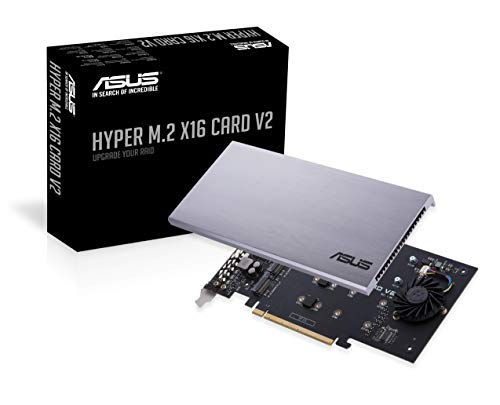
This variant of the ASUS Hyper M.2 X16 card supports four additional NVMe M.2 drives using Intel VROC with PCIe 3.0 x16 interfaces. It is designed to deliver high-speed NVMe RAID configurations, suitable for demanding workloads in workstations and servers that require rapid sequential and random access. The design includes a two-phase power solution capable of delivering up to 14W per drive in some configurations, emphasizing reliability for sustained data throughput. While it enables large-scale NVMe storage, ensure the host system supports VROC or similar RAID features for best results.
Buying Guide: Key Considerations For PCIe X16 Expansion Enclosures
When selecting a PCIe X16 expansion chassis or card, consider the following factors to ensure compatibility and performance across multiple use cases:
- Interface and bandwidth: Thunderbolt 3/4 offers high-speed external PCIe connectivity, but check total bandwidth per slot and for dual-slot configurations. PCIe versions (3.0 vs 4.0) influence maximum throughput and device compatibility.
- Slot count and layout: Single-slot enclosures are compact and portable; dual-slot designs increase expandability but may demand more power and cooling. Confirm card spacing and power delivery for your setup.
- Card compatibility: Verify that the chassis supports the exact PCIe card type you plan to use (NVMe, video capture, RAID controllers, fiber NICs, etc.). Some enclosures exclude GPUs due to power or thermal constraints.
- Power delivery: Many enclosures supply limited power to the PCIe slot. Check whether additional power adapters are required for high-power NVMe drives or expansion cards.
- Display and video support: If you plan to drive displays via the enclosure, ensure the supported video interfaces (DP, TB3/4) and resolutions align with your monitors (4K/5K compatibility).
- Operating system and drivers: Ensure compatibility with Windows, macOS, or Linux environments and verify driver availability for your PCIe cards.
- Portability vs. performance: Portable enclosures are easy to transport but may have tighter cooling. Larger chassis can sustain heavier workloads but are less mobile.
- Heat management: External PCIe cards can generate significant heat. Favor enclosures with effective cooling or thermal design, especially for NVMe RAID or high-bandwidth adapters.
- Future-proofing: If you anticipate upgrading to faster NVMe drives, newer TB3/4 interfaces, or additional cards, opt for a chassis with upgradable components or broader slot support.
In selecting an option, map your current needs (such as rapid NVMe storage pools, high-bandwidth capture, or multi-card workloads) to the enclosure’s features, while ensuring system compatibility and power requirements. This approach helps balance performance with reliability in everyday professional use.