Guitarists seeking precise tone control turn to parametric equalizers to sculpt their sound beyond basic presets. This guide highlights five standout pedals that offer flexible frequency control, wide boost/cut ranges, and reliable performance in various playing environments. Each option is evaluated for tonal clarity, ease of use, and build quality to help players match their rigs and genres.
| Product | Brand |
|---|---|
| Ibanez PTEQ Pentatone 5-band Parametric EQ Pedal | Ibanez |
| Wampler EQuator Advanced Audio Equalizer | Wampler |
| Orange Two Stroke Active Dual-Parametric EQ/Boost | Orange |
| JOYO 6-Band EQ Pedal (JF-11) | JOYO |
| MXR Ten Band EQ Guitar Pedal | MXR |
Ibanez PTEQ Pentatone 5-Band Parametric EQ Pedal

The Ibanez PTEQ Pentatone is a five-band parametric EQ pedal that also features a master volume control for on-the-fly level matching. With a wide frequency range from 30 Hz to 14.5 kHz, it offers flexible sculpting for clean tones, overdrives, and modulated textures. The pedal emphasizes precise band controls and accessible level faders, making it suitable for players who want deep, studio-like EQ shaping in a compact pedalboard form.
Wampler EQuator Advanced Audio Equalizer

The Wampler EQuator stands out with fixed bass and treble controls and two semi-parametric mid bands. Its clearly defined frequencies, marked sweet spots, and a compact footprint deliver one of the most flexible and user-friendly EQ pedals available. It emphasizes precise frequency control, strong output, and a streamlined design ideal for gigging players who need quick tonal adjustments without a complicated setup.
Orange Two Stroke Active Dual-Parametric EQ/Boost
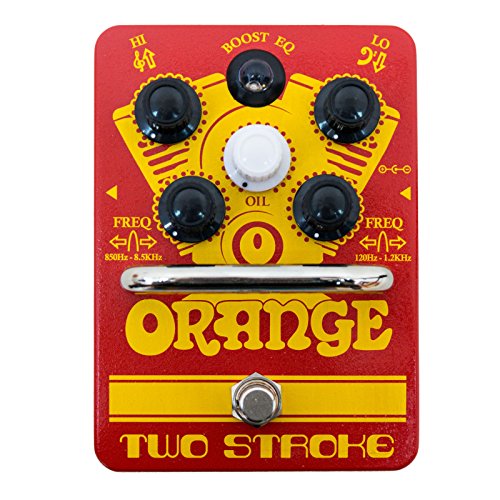
The Orange Two Stroke combines dual parametric EQ with an active boost, offering 12 dB of boost alongside a dual-parameter section. This configuration is designed for players who want broad tonal shaping plus an extra lift for solos or lead work. The pedal’s robust build and live-friendly boost stage complement its EQ versatility, making it a strong choice for players who perform in various genres and gear setups.
JOYO 6-Band EQ Pedal (JF-11)

The JOYO JF-11 offers six frequency bands with up to ±18 dB of boost/cut per band. The centers cover common guitar tones, from lows to highs, enabling players to carve a signature edge in various styles. Its true bypass output preserves signal integrity, and the aluminum housing contributes to a sturdy, road-ready build for practice spaces and stages alike.
MXR Ten Band EQ

The MXR Ten Band EQ provides a wide tonal palette with ten fixed center frequencies and up to ±12 dB of boost/cut per band. Its 18-volt operation increases headroom, making it a reliable choice for players who require precise global shaping without sacrificing signal clarity. The pedal’s LEDs enhance visibility on stage, and its rugged chassis suits touring setups.
Buying Guide
When choosing a guitar parametric EQ pedal, consider these factors to align with your rig and playing style:
- Number of bands and availability of parametric controls: More bands offer finer control, especially for studio-like tone shaping, but may complicate quick live adjustments.
- Frequency centers and boost/cut ranges: Look for frequencies that match your guitar and style. Wider boost/cut ranges (+/- 15 to 18 dB) provide more tonal flexibility but require careful handling to avoid harshness.
- True bypass vs buffered: True bypass preserves your signal when the pedal is off, while buffered designs maintain tone in long signal chains. Consider pedal order in your chain and garden-variety noise concerns.
- Build quality and power requirements: Road-ready enclosures and reliable power options (including battery or standard instrument power) prevent failures during gigs.
- Ease of use: For live settings, pedals with clearly labeled frequencies and intuitive controls help reduce setup time and mistakes during performances.
- Verse of tone control: Determine whether you need one standalone EQ for tone shaping, or a two-stage approach with an EQ before or after dirt pedals to sculpt your drive and presence.
- Size and footprint: Pedalboard space matters; compact options offer portability, while larger units may provide more knobs for quick adjustments at a glance.
In practice, players often pair a parametric EQ with a traditional graphic EQ or a boost pedal to achieve a broad tonal canvas. The five pedals featured here cover a spectrum from compact, studio-inspired units to robust, stage-ready solutions, allowing input from multiple playing contexts—clean, crunchy, and heavy tones alike.